Background
Status: Idea Sharing, Community Interest Engagement
Vision: Chetwoot Restorative Art Installation is a temporary bio remedial art installation designed to:
- Clean the water of the Deschutes River before it enters Budd Inlet.
- Create safe habitat for salmon fry at their freshwater stage, as well as habitat and nesting areas for birds.
- Educate the public about the abundant Natural History of this South Sound region and the importance of water quality.
- Generate beauty that will attract the public to interact with this area and inspire stewardship for the long term preservation of this unique environment.
- Create a living laboratory for environmental education classes that will collect data on the efficiency of ecovention installations such as these for possible further expansion and reproduction.
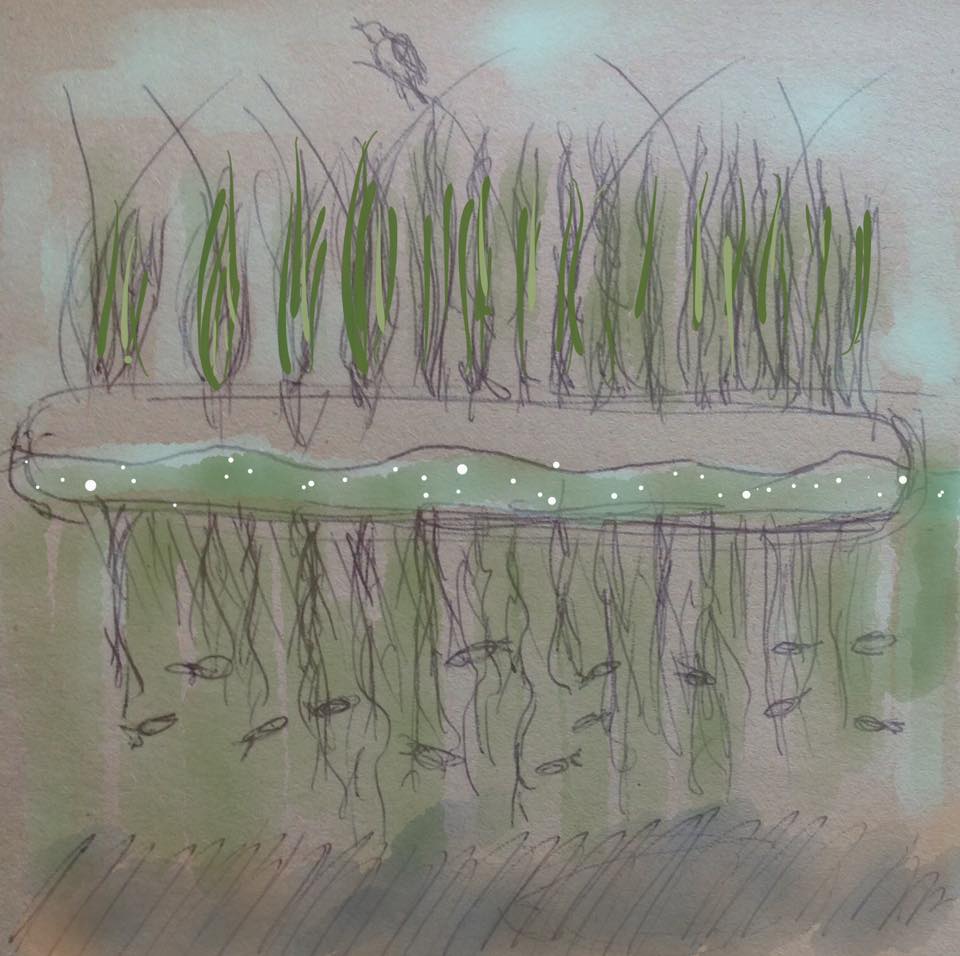
Background: This installation will be composed of multiple anchored floating wetlands offshore of the old Tumwater Brewery, just downstream of a salmon hatchery, that will be planted with indigenous wetland and estuary plants.
The floating wetlands would be mats that supported indigenous plants and even mushrooms to clean the water. These temporary, anchored islands would be great habitat as well as being beautiful, and educational, about the importance of water quality and the role of shoreline plants to water quality.
Deschutes River water quality is not only important to the salmon and the people who live along the shore but to all the creatures of the Salish Sea from Olympia Oysters to the Orca Whales.
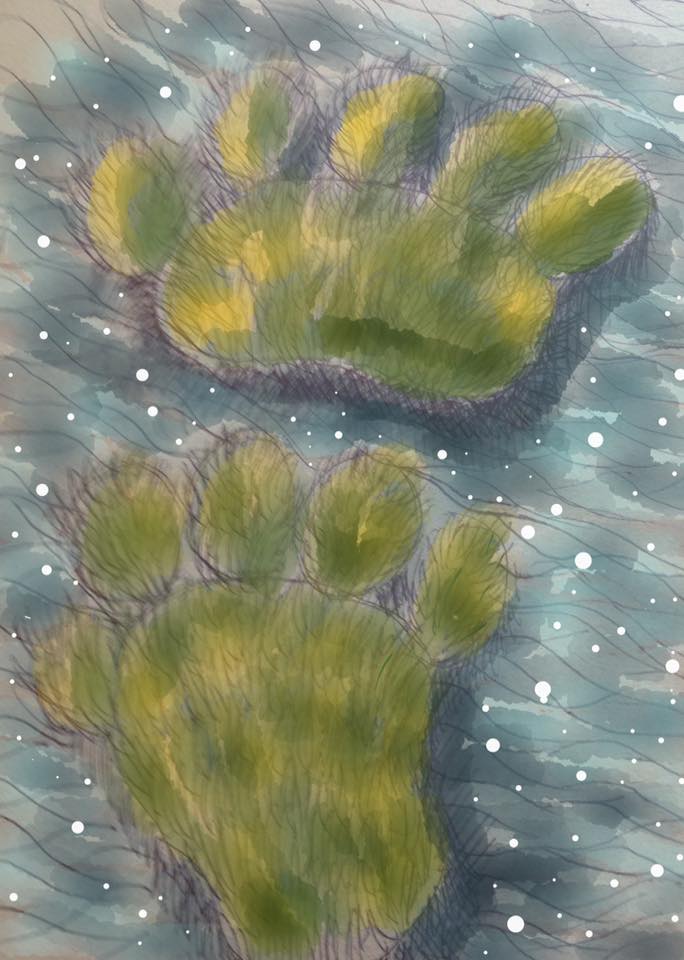
Floating wetlands like this have been successfully used around the world to remitigate damaged water systems and improve habitat. What is unique about this installation is that the floating wetlands will be in the form of bear tracks. From above and at a distance it will appear as the tracks of a Black Bear wandering along the riverbank.
The floating, covered, observation deck would have binoculars as well as bathyscopes, directional microphones, and microscopes, for observing the environment and monitoring. Plants would be monitored, removed, tested and disposed of as part of the project by community members trained to be Sweetwater Stewards.

Floating Wetlands in Action: Chicago’s Mile-Long River Habitat Project
In Chicago, a mile-long stretch of the river is being revitalized through floating wetland modules that bring nature back to an urban waterway. These structures improve water quality, support pollinators, and create visible green space in the heart of the city—an inspiring example of what we are proposing for the

Floating Wetlands in Action: The Duwamish Biobarges Project
Along the industrialized Duwamish River in Seattle, the UW Green Futures Lab collaborated with community groups to create modular “biobarges” planted with native species. These floating wetlands filter pollutants, improve water quality, and provide essential habitat for salmon and other wildlife—much like what we are proposing for the Deschutes River

Floating Wetlands in Action: Green Lake’s Innovative Restoration Project
The Friends of Green Lake have launched a pilot project to improve water quality and habitat through the installation of floating wetlands—much like what we are proposing for the Deschutes River and Estuary. These constructed islands, planted with native vegetation, help absorb excess nutrients, reduce algae growth, and provide shelter